
Acupuncture for Anxiety & Depression in San Diego
Classical Chinese Medicine for Mental & Emotional Well-Being
Anxiety and depression aren't just happening in your mind, they're held in your body. Classical Chinese Medicine understands what modern neuroscience is only beginning to discover: your emotional state is inseparable from your nervous system, sleep quality, digestive health, and the subtle patterns of how your body processes stress.
Gateway Acupuncture & Wellness treats anxiety and depression by addressing where these patterns live in your body, not just managing symptoms, but releasing the emotional holdings that create ongoing suffering and helping your system regain its natural capacity for resilience, rest, and emotional balance.
How Emotions Get Stuck in the Body
In Classical Chinese Medicine, emotions aren't abstract psychological states. They're physiological events that move through specific pathways in the body. When you experience something difficult and don't fully process it, your body does something remarkable: instead of letting that errant energy sit in the organ channels and threaten the function of the vital organs, it protects your body by storing that unresolved emotional experience in more expendable tissue, your blood vessels.
This isn't metaphorical. The vessels that carry blood throughout your body also carry what Chinese medicine calls "Shen," your spirit, consciousness, or emotional vitality. When life throws something at you that's too much to handle in the moment (a loss, a betrayal, prolonged stress, or trauma), your body creates space to hold it, keeping your heart and vital organs clear so you can keep functioning.
Have you ever been in such grief that your digestion stops? So angry that your temperature rises rapidly and you could imagine a blood vessel bursting? So scared that your legs give out? Or on the more positive side, so excited you feel butterflies in your stomach? Emotions need to be expressed. When they aren't, the body finds ways to manage them.
Most animals instinctively release intense emotions through physical movement. When ducks confront each other over territory, they flap their wings and quack loudly, then shake it off and move on. Dogs shake their entire body when they get too excited or worked up, releasing the charge. Humans are meant to do the same. Children do this naturally, crying, shaking, moving their bodies when overwhelmed. But somewhere after childhood, we learn to "regulate" ourselves, to hold still, to not make a scene. Many emotions get stuffed down instead of released, and your body is forced to create storage space for them in your blood vessels.
Your ability to store emotions in the blood has a limit that is unique to your physiology. Over time, as these holdings accumulate, they begin to affect how you feel, how you sleep, how your digestive system works, and how your nervous system responds to the world. What started as your body's intelligent protection mechanism can become chronic anxiety, depression, or the exhausting feeling of being stuck despite doing everything "right."
Three Levels of Emotional Experience
Not all anxiety and depression are the same. Classical Chinese Medicine recognizes three distinct levels:
Environmental Mood: Sometimes you just feel off (anxious, irritable, or sad) without knowing why. This is your body responding to something in your environment or energy field that you're sensing but not consciously aware of. It's acute, it comes and goes, and it doesn't have a clear target. You might say, "I just feel anxious today. I don't know why."
Acknowledged Emotion: This is when you can identify what you're feeling and why. "I'm anxious about this presentation." "I'm depressed because of this breakup." The emotion has a story, a reason, and you're aware of it. But awareness alone doesn't always resolve it. The feeling persists even when you understand it.
Constitutional Pattern: Some emotional tendencies run deeper. They're woven into your fundamental makeup, often shaped by early life experiences or inherited patterns. This is the person who says, "I've always been anxious," or "Depression runs in my family." These patterns feel like part of who you are, but they're actually longstanding holdings in your system that can be addressed.
Classical acupuncture treats all three levels, meeting you exactly where the emotional pattern lives in your body.
Why Your Body Creates Anxiety & Depression
Your body has an elegant system for managing stress and protecting your emotional well-being. In Chinese medicine, this is governed by what's called the Pericardium. This is not just the physical membrane around your heart, but an entire functional cardiovascular system that acts as your coping mechanism.
When functioning well, this system:
Manages stress before it overwhelms you
Processes emotions so they don't get stuck
Preserves your sanity during difficult times
Generates empathy and emotional intelligence
Uses rational thinking to make sense of feelings
Creates a narrative to place experiences, particularly hurtful ones, in context of your identity and belief system
But when life demands more than this system can handle (prolonged stress, trauma, grief, repeated disappointments, and the chronic stimulation that is so "natural" to modern life), this system begins to fail. Your coping mechanism becomes strained. Emotions that should flow through and resolve instead get stored in your blood vessels. Your nervous system gets stuck in fight-or-flight mode. Sleep becomes difficult. Digestion suffers. The rational mind can't overcome the feelings anymore. We all know the story.
This is when anxiety and depression take root. Not because something is wrong with you, but because your body's capacity to manage stress has been exceeded and it needs help restoring balance.
The Physical Reality of Anxiety & Depression
Patients often notice that anxiety and depression don't just affect their mood. They affect everything:
Sleep becomes disrupted. You can't fall asleep because your mind won't stop, or you wake at 3am with your heart racing, or you sleep 10 hours and still feel exhausted. Sleep quality reflects nervous system dysregulation. Your body can't shift out of sympathetic activation (stimulated) mode into the deep rest (parasympathetic mode) needed for emotional restoration, what we often call "rest and digest."
Digestion changes. Anxiety creates bloating, loss of appetite, nausea, or urgent bowel movements. Depression brings constipation, heaviness after eating, or complete disinterest in food. The gut-brain connection isn't just a developing health niche. In Chinese medicine, digestive strength and emotional resilience are inseparable. When one suffers, so does the other.
Physical sensations appear. Tightness in your chest. Lump in your throat. Tension in your neck, between your shoulder blades, and jaw. Restlessness in your legs. These aren't separate from your anxiety or depression. They're where the emotional pattern is living in your body, creating physical sensation as a signal that something needs to be addressed.
Energy and motivation disappear. Depression often manifests as profound fatigue, numbness, inability to feel pleasure, or the sense that even small tasks require enormous effort. This isn't laziness. It's constitutional depletion, your body's vitality drained by the ongoing internal work of attempting to manage unresolved emotions.
Classical acupuncture addresses all of these simultaneously because they're all expressions of the same underlying pattern.
How Classical Acupuncture Treats Anxiety & Depression
Unlike approaches that treat anxiety and depression as isolated problems requiring symptom management, Classical Chinese Medicine asks: Why is this happening in the first place? What system in the body is strained from this experience?
The treatment approach depends on what we find:
If your nervous system is dysregulated: stuck in fight-or-flight and unable to rest, we work to restore your body's ability to shift into parasympathetic mode (rest and digest). We recalibrate your baseline state so you're not constantly activated.
If emotions are held in your blood vessels: unresolved grief, anger, fear, betrayal. We use specific techniques to release these holdings. Patients often describe emotional releases during treatment: crying without knowing why, sudden clarity about an old wound, old memories or images coming up out of the blue, or the feeling that something heavy has lifted. Evidence of your body letting go of what it's been carrying.
If your constitution is depleted: exhausted from managing stress for too long, we rebuild your foundational vitality before addressing the emotional patterns. You can't process difficult emotions when you're running on empty. Sometimes the most powerful intervention is simply restoring your capacity to handle the eventual release of what is holding you back.
If stress has overwhelmed your coping system: the mechanism that should protect you from emotional overload. We work to restore that function so you can handle life's challenges without becoming overwhelmed or shutting down.
The treatment itself is remarkably simple: thin needles placed along specific pathways in your body, sometimes for just minutes, sometimes combined with other gentle techniques like cupping, moxabustion, or gua sha to release holdings. Many patients fall into deep, restorative sleep during treatment, the kind of sleep that's been elusive for months or years.
What Changes Look Like
The shifts from Classical acupuncture treatment often surprise patients because at times they are dramatic, but often they are subtle, global, whole-system changes:
Sleep improves first. Most patients notice within 2-3 weeks that they're falling asleep more easily, sleeping more deeply, or waking feeling actually rested. This is the foundation. When your nervous system can finally downregulate, everything else becomes possible. Nighttime is when the body replenishes blood, body fluids, hormones, and more. It is a critical time for health and healing.
Emotional reactivity decreases. Things that used to trigger intense anxiety or send you spiraling into depression still happen, but your system doesn't respond the same way. There's space between the trigger and your reaction. You notice you're less easily overwhelmed, less quick to catastrophize, more able to stay present.
Physical symptoms resolve. The tightness in your chest eases. Digestion normalizes. The constant low-grade tension you didn't even realize you were carrying begins to release. These are signs that the underlying pattern is shifting.
Capacity returns. This is what patients describe as "feeling like myself again." Motivation comes back. Small pleasures become enjoyable again. The fog lifts. You have energy to get through the day and actually engage with life.
Resilience builds. This is the deeper work: over time we are increasing your capacity to handle future stress without getting stuck. Your system learns new patterns, how to process difficult emotions as they arise rather than storing them, how to recover from activation rather than staying locked in fight-or-flight.
Most patients notice meaningful changes within 4-5 weeks of weekly treatment. Deeper constitutional shifts (the kind that fundamentally change your baseline state) typically unfold over 2-3 months.
What Patients Are Saying
"I came to Diego after years of managing anxiety with medication that left me feeling numb. Within a month of treatment, I was sleeping through the night for the first time in years. Three months in, I've tapered off one of my medications with my doctor's support and I actually feel like myself again."
— Sarah M., North Park
"The difference between this and the acupuncture I tried before is night and day. Diego doesn't just put needles in and leave you there. He actually understands what's happening in my body and why I can't sleep, why my digestion is a mess when I'm stressed. I've tried therapy, medication, meditation apps. This is the first thing that's actually changed how my nervous system responds."
— Michael T., Hillcrest
"I was skeptical about acupuncture helping depression, but I was desperate. The first few sessions I just slept on the table, the kind of deep sleep I hadn't had in months. By week five, I noticed I could get through my day without that crushing fatigue. By month three, I stopped canceling plans with friends. It's not that I never feel depressed anymore, it's that I have the capacity to move through it instead of being stuck in it."
— Jennifer L., University Heights
Who This Approach Serves
Classical acupuncture for anxiety and depression is particularly powerful for people who:
Experience anxiety and depression alongside physical symptoms (digestive issues, chronic tension, sleep problems, fatigue)
Have tried medication with limited results or unwanted side effects
Want to reduce or discontinue psychiatric medication under medical supervision
Feel stuck despite therapy, lifestyle changes, or other interventions
Experience anxiety or depression that seems to come from nowhere, with no clear trigger
Carry unresolved grief, trauma, or emotional patterns from the past
Notice their mental health worsens during stress, hormonal changes, or seasonal shifts
Want an approach that treats the whole person, not just the symptoms
We work collaboratively with therapists, psychiatrists, and primary care providers. Acupuncture complements talk therapy and medication. It's not an either/or choice. Therapy addresses thought patterns and behaviors, where health issues arise. Acupuncture addresses the energetic patterns in your body that keep you stuck.
Your First Visit: What to Expect
Initial Patient Intake & Treatment (80 minutes | $225)
Your first session includes:
Comprehensive health history including your mental health journey, sleep patterns, digestive health, stress history, and what you've tried before
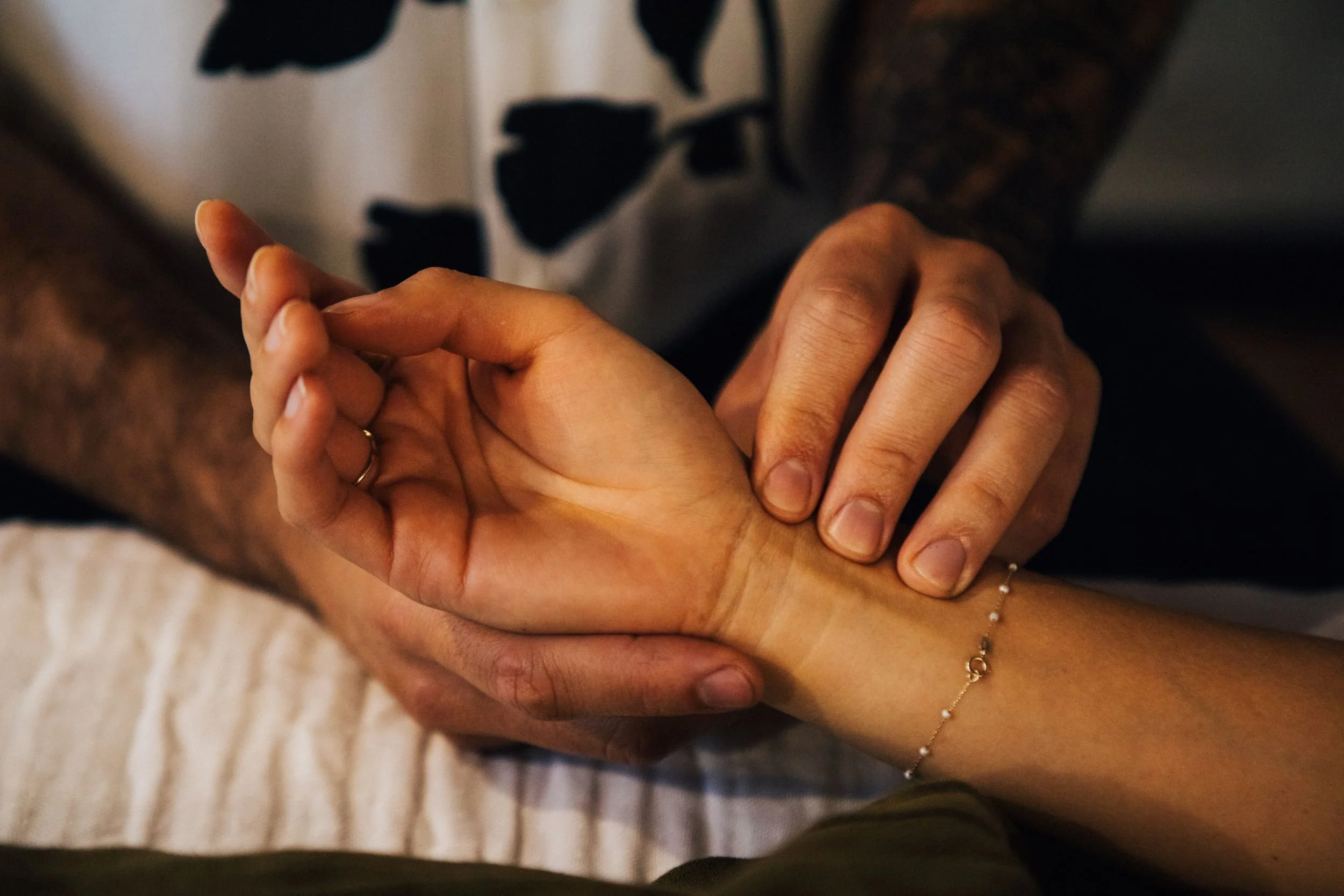
Classical diagnostic assessment using pulse reading and other traditional methods to understand where emotional patterns are living in your body
Discussion of your story, symptoms, triggers, and what you're hoping will change
Personalized treatment plan addressing your unique pattern (not a generic anxiety/depression protocol, but treatment specific to what your body needs)
First acupuncture treatment
Follow-Up Treatments (55 minutes | $180)
Most patients begin with weekly sessions. The first few treatments focus on calming your nervous system and improving sleep, creating the foundation for deeper emotional work to come. As your system stabilizes, we address the underlying constitutional patterns and emotional holdings. We space sessions out over time to encourage your body's independence from external intervention.
Frequently Asked Questions
Can acupuncture replace psychiatric medication?
For some people, acupuncture can reduce or eventually eliminate the need for medication, but this should always be done in collaboration with your prescribing physician, never on your own. Some patients use acupuncture to address symptoms medication doesn't fully resolve (sleep issues, emotional numbness, digestive side effects). Others are able to slowly taper medications under medical supervision as their nervous system regains natural regulation. We work with your care team, not against them.
How long does it take to see results?
Most patients notice improvements in sleep quality, stress response, or physical symptoms within 2-4 weeks. Deeper shifts in mood, anxiety patterns, and emotional resilience typically develop over 2-3 months of weekly treatment. Constitutional patterns that have been present for years often require longer, but the changes tend to be lasting rather than temporary symptom relief.
Will I have to talk about my feelings?
Classical acupuncture is more effective when we tie the mind's resistance, the story, to the symptoms. The treatment works on a physiological level by releasing emotional holdings from your blood vessels, shifting your nervous system, restoring your capacity to rest and digest. Many patients find emotional insights or releases happen naturally during or after treatment. We will never push you deeper or further than you are willing or ready to work.
What if I'm already in therapy?
Excellent! Acupuncture and therapy work beautifully together. Therapy helps you understand reaction patterns and develop new ways of thinking and relating. Acupuncture helps your nervous system and body support those changes rather than fighting against them. Many therapists refer clients for acupuncture because they recognize that insight alone often isn't enough and the body needs to shift too.
Can I continue my medication while doing acupuncture?
Absolutely. Continue all prescribed medications unless your doctor advises otherwise. Acupuncture works alongside medication. Some people eventually reduce dosages under medical supervision; others stay on medication and use acupuncture to address what medication doesn't fully resolve. There's no conflict between the two approaches.
Do you take insurance?
We operate as a cash-pay practice but provide detailed superbills that you can submit to your insurance company for possible reimbursement. Some insurance plans cover acupuncture for mental health conditions, particularly if you have out-of-network benefits.
Ready to Begin?
Schedule your initial consultation to explore how Classical Acupuncture can support your journey toward emotional balance and nervous system resilience.
Complimentary Consultation: 15 minutes
Initial Intake & Treatment: 80 minutes | $225
Follow-Up Treatments: 55 minutes | $180
Located in Hillcrest, San Diego
Gateway Acupuncture & Wellness
Diego García, L.Ac.
3636 5th Ave, Suite 101
San Diego, CA 92103
Serving: Mission Hills, Mission Valley, Hillcrest, North & South Park, Golden Hill, Normal Heights, Kensington, University Heights, Bankers Hill, Downtown San Diego, and nearby communities.